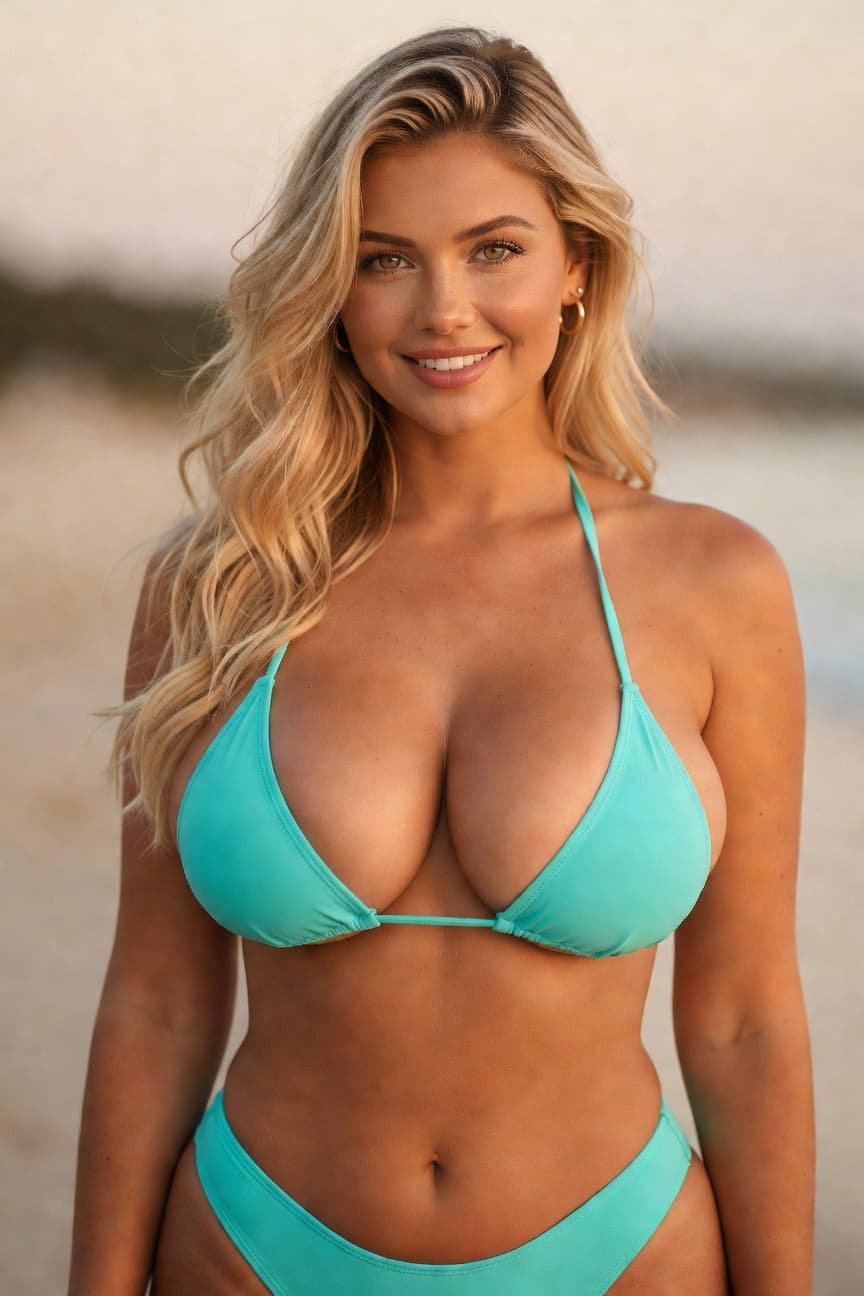
What Nano Banana (Gemini 2.5 Flash Image) actually is
Nano Banana is the community nickname for Google's Gemini 2.5 Flash Image model, launched late 2025 as Google's answer to GPT Image and the broader generative-image category. It's available via the Gemini API ($0.039 per generated image), bundled into the Gemini Advanced subscription ($19.99/mo alongside the full Gemini product), and surfaced inside the Gemini app on Android and iOS.
The model handles prompt-to-image generation, reference-image editing (up to 3 input images), and basic composition tasks (change the background, swap the object, keep the character). It's tuned for speed and broad subject coverage — landscapes, product shots, logos, abstract compositions, architectural renders, illustrated content. For those use cases Nano Banana works well and competes directly with Midjourney, DALL·E, and Firefly.
Where it struggles — and why users search for alternatives — is persona-first and apparel-adjacent work.
What Nano Banana does well
Fair acknowledgment matters before the restrictions discussion. Nano Banana is a serious tool and is the right choice for several use cases:
Fast single-shot edits. Upload an image, prompt the change, get the result in seconds. For "take this photo and swap the background to a beach," Nano Banana is faster than most alternatives.
Google ecosystem integration. Nano Banana appears inside Google Workspace (Docs, Slides), inside the Gemini app, inside Gmail-adjacent flows. If your workflow lives in Google's product graph, image gen is one click away everywhere you already work.
Developer API. The $0.039/image API is simple and well-documented. For developers building image-gen on top of Google infrastructure, Nano Banana is a sensible choice.
Safe-for-work scene generation. Landscapes, product photography, logos, infographics, abstract composition — all of it generates reliably without classifier friction.
Illustrated content. Non-photoreal styles (cartoon, flat illustration, watercolor) tend to pass through the classifier more easily than photoreal portrait work.
What Nano Banana refuses — the categories
Nano Banana's content classifier is tuned conservatively, which means the "refuse" surface is larger than many creators expect. Observed patterns through 2026:
Hard limits (industry-standard, non-negotiable): - Anything involving minors in any adult, romantic, or suggestive context - Real-person likenesses without consent (named celebrities, politicians, private individuals) - Graphic violence and self-harm content - Illegal content (CSAM, non-consensual intimate imagery, terrorism) - Hate and harassment content targeting protected groups
These are the same industry-wide hard limits every legitimate AI product enforces. No tool at any price unlocks them, and no rewording will unblock them.
Soft refusals (the false-positive hot zone): - Swimwear on a model (one-piece sometimes passes, bikinis rarely) - Activewear with form-fitting cuts (sports bras, close-fit leggings) - Lingerie or underwear in any context (policy-level block) - Portrait likeness of a specific real person (celebrity names auto-refused) - "Attractive woman" generic prompts (classifier sensitivity varies) - Fashion editorial with close-fit or revealing cuts - Fitness poses that overlap with the activewear category
The soft refusals are where legitimate commercial creators hit the wall most often. Apparel brands running on-model product photography, fitness influencers generating content for their pages, and swimwear DTC brands all live in categories where Nano Banana's classifier false-positives frequently.
Why Google's safety stack is tuned this way
Google's Gemini safety classifier is designed around mass-market consumer risk. The product has to be safe for a 15-year-old to use in a Chromebook classroom, for Workspace to integrate into enterprise environments without liability exposure, and for the Gemini app to pass app-store review processes that distinguish consumer-general from consumer-adult tooling.
That design goal makes the classifier conservatively tuned. It's tuned to false-positive on borderline content rather than false-negative, because a false-negative on actually-flagged content costs Google more (regulatory exposure, PR incident, enterprise contract risk) than a false-positive costs the creator (frustration, workflow slowdown, moving to a different tool).
The tradeoff is reasonable from Google's side. It's also real for creators whose legitimate commercial use case sits in the gray zone — apparel photography, fitness content, portrait work — where the classifier's conservative tune blocks a large share of prompts that would be fine in other tools.
Paid tiers don't loosen the classifier. Gemini Advanced ($19.99/mo) and the API ($0.039/image) both apply the same classifier logic. "Pay more for access to blocked categories" is not a path Google offers at any tier.
Specific trigger patterns — what prompts get blocked
From aggregated creator reports on Google's own forums and community threads through 2026, these are the most common vocabulary patterns that trigger the classifier on prompts the user considered benign:
| Prompt pattern | What tends to happen | Why |
|---|---|---|
| "Woman in a bikini" / "swimsuit model" | Refused | Swimwear classifier is tightly tuned |
| "Sports bra and leggings" / "yoga outfit" | Often refused | Activewear overlaps with suggestive-content classifier |
| "Lingerie" / "underwear" (any context) | Always refused | Policy-level hard block |
| "Attractive woman" / "beautiful model" | Sometimes refused | Suggestive-content classifier sensitivity |
| Named celebrity or politician | Always refused | Real-person likeness filter |
| "Fashion editorial, revealing cut" | Often refused | Fashion classifier conservative on body-visible cuts |
| "Fitness pose, flexing" | Sometimes refused | Overlap with suggestive-pose classifier |
| Portrait of specific real person | Always refused | Real-person likeness filter |
| "Woman in bed" / "bedroom" / "intimate setting" | Often refused | Intimacy classifier |
| "Topless" / "shirtless" (any context) | Always refused | Nudity filter |
The pattern behind the pattern. Google's classifier matches vocabulary against statistical patterns associated with policy-flagged content. A prompt describing a benign scene using vocabulary that appears frequently in flagged content gets caught, even when the intent is clearly commercial or editorial. Repeating the same blocked prompt returns the same block — the classifier is deterministic on identical input.
What doesn't work: trying to word-around the hard limits (minors, real-person likenesses, graphic violence, illegal content). Those blocks are intentional and no rewording will unblock them. Rephrasing is only useful for false-positive patterns where the intent is legitimate but the vocabulary trips the classifier.
How Nano Banana compares to other image generators on content posture
Rough ordering of mainstream general-purpose image generators from most permissive to strictest on soft-content categories, as of 2026:
Self-hosted (ComfyUI, Fooocus, Automatic1111) — No classifier. The model runs on your hardware and whatever moderation exists is what you configure. Full flexibility, meaningful setup cost.
Grok Imagine — Mid-strict. Post-March 2026 filter tightening pulled it closer to Midjourney than to permissive self-hosted. Still permits more apparel and portrait work than Nano Banana or Firefly.
Midjourney v7 — Mid-strict. Blocks real-person likenesses, moderate on suggestive content, allows editorial-style artistic work with the right prompt framing. Different band lines than Nano Banana.
Nano Banana (Gemini 2.5 Flash Image) — Strict. Conservative classifier tune, heavy false-positive rate on fashion/apparel/portrait. Google's mass-market consumer-safety design.
DALL·E 3 / GPT Image — Strict. Named people usually blocked, suggestive content heavily filtered, body-part descriptors trigger refusals consistently.
Adobe Firefly — Strictest. Commercial-safe-by-design, trained on licensed stock, no nudity or suggestive content at any level.
Practical takeaway: if your legitimate use case is consistently blocked on Nano Banana, waiting for Google to loosen the classifier isn't a reliable strategy (policy posture tends to tighten over time, not loosen). The alternatives are: switch to a tool with a different policy design, or use a category-dedicated product built for the use case Nano Banana doesn't serve.
When to use a different tool
If Nano Banana's classifier is blocking your legitimate use case consistently, the fit is probably wrong. Three honest paths from here:
For apparel, swimwear, fitness, or lookbook photography: category-dedicated tools exist for commercial apparel content. Specialist AI photography products (named: Botika, Lalaland.ai, VirtualStage AI for interiors) target apparel-specific workflows with policy postures tuned for commercial on-model product photography. These are better fits than fighting Nano Banana's classifier.
For portrait or editorial work with specific real-person likeness: no mainstream general-purpose tool handles this — the hard limit on named-person generation is industry-wide. For editorial likeness, licensed stock photography remains the right answer.
For persona-first photoreal generation (same character across many shots): general-purpose tools don't solve this well regardless of policy. Even Nano Banana's reference-image feature drifts on identity across a set. Category-dedicated persona-companion tools train per-character image models (per-persona LoRA) so the same face is identity-locked across every generation. Sloane is one of these: upload 1-5 reference photos through the custom-persona builder, wait ~10 minutes for training, generate photorealistic photos of that specific woman forever with locked identity. Different product shape than Nano Banana — not a general image generator, but purpose-built for the use case where character consistency matters most.
The appeal path (if you think your use case was wrongly blocked)
Google doesn't offer a formal individual-prompt appeal process for Gemini image generation, but there are informal channels:
In-app feedback. The error state usually includes a "report problem" link. Use it. Include the prompt and the error state. Individual reports rarely reverse a specific decision but accumulate as signal for the moderation team.
Google Cloud Community forum. For API users, the Google Cloud Community has active threads on image_safety false-positives. Pattern-level reports (multiple users hitting the same false positive) have occasionally surfaced tuning changes.
Realistic expectations. The Gemini safety team responds to signal (aggregated pattern reports with data), not to individual arguments. Appeals on specific prompts rarely move anything. Pattern reports with multiple users and reproducible examples occasionally do.
What definitely doesn't work: DMing Google employees, claiming enterprise/press/verified status, or arguing the policy in the feedback text. The classifier's thresholds are set by product decisions, not case-by-case review.