COMPARISON
Sloane vs
Nano Banana.
Nano Banana is a generation tool — you give it a prompt or a reference image, you get an image. Sloane is a product — the chat, the photos, and the video are all the same woman, and she remembers you.
Updated October 16, 2026
TL;DR
- Nano Banana is Google's general-purpose image generator (officially Gemini 2.5 Flash Image). Sloane is a persona-first AI companion where chat, photos, and video are all the same woman.
- Nano Banana has no persona layer — each generation is independent, and its reference-image feature drifts on identity between gens. Sloane's per-persona LoRA locks identity across every photo.
- Nano Banana pricing: $0.039/image via API, or included in Gemini Advanced ($19.99/mo bundled across all Gemini features). Sloane Premium is $19.99/mo for the full companion stack.
- Google forum threads through 2026 document heavy classifier false-positives on fashion, apparel, and portrait prompts — a known trade-off of the safety-tuned design.
- Nano Banana is faster to iterate on single-shot edits; Sloane is purpose-built for the "same character across many shots" use case.
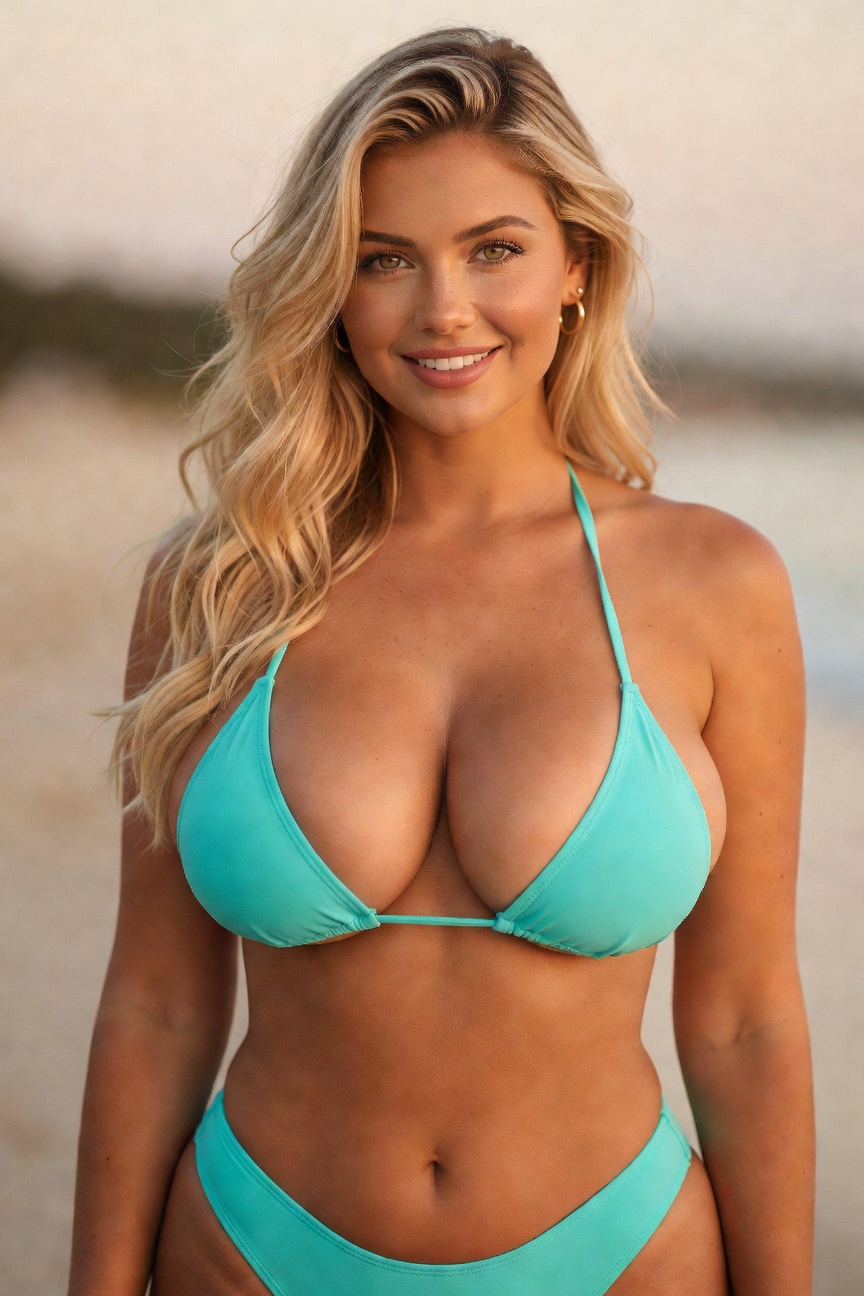
Meet Sandra
Nano Banana gives you a different woman every regeneration. Sandra's the same Sandra every photo, every message — because her image model actually knows what she looks like.
AT A GLANCE
Quick comparison
A product vs. a general-purpose image generator.
Nano Banana is Google's image surface — the public name for Gemini 2.5 Flash Image, launched late 2025. You give it a prompt or a reference image, you get an image back. Fast, good quality, broad subject coverage. It's a great prompt-to-pixels tool.
Sloane is the other thing entirely. Every output — her replies in chat, the photos she sends, the short videos that show up in a conversation — is anchored to the same persona. Maya in chat is Maya in the photo is Maya in the video. The product is the integration, not any single output type.
Persona-anchored visual identity vs. fresh generation each time.
Sloane's images go through a per-persona LoRA. The image model has actually learned what Maya looks like, across many references — so Maya in photo #1 looks like Maya in photo #50. Same face, same body, same hair.
Nano Banana generates fresh from each prompt. Its reference-image feature (upload a photo, ask for an edit) is the closest thing to character consistency it offers — but it treats the reference as inspiration, not as an identity anchor. The face drifts between gens, more on bigger edits. Google's own documentation describes it as "stylistic reference," not "identity preservation."
Where Nano Banana's reference-image feature falls short on character consistency.
Nano Banana supports up to three reference images per prompt. For brand-safe product work (keep the logo, change the background) that works well. For "same woman across 40 different outfits," it drifts — different jawline, different nose, different hair texture, often different ethnicity across a set that was supposed to be one person.
This is a known limitation of the reference-image-only approach. The alternative — per-persona LoRA training, where the model is actually taught what one specific face looks like — is what Sloane does automatically through the custom-persona builder: upload 1-5 reference photos, wait ~10 minutes, generate forever with the same face locked in.
Nano Banana's content classifier — the Gemini safety stack explained.
Nano Banana inherits Google's Gemini safety stack. The classifier runs on both prompts and generated outputs, with error states like `IMAGE_SAFETY`, `PROHIBITED_CONTENT`, and `OTHER` surfacing when a generation is blocked.
Google's official forum through 2026 documents a consistent pattern: the classifier false-positives on fashion, apparel, portrait, and fitness prompts more often than on landscape or product work. Creators doing commercial photography for apparel brands and fitness pages hit this constantly — swimwear, activewear, close-fit cuts all sit in the "default-refuse" gray zone. Google's position has been consistent: Nano Banana is tuned for mass-market consumer safety, and the policy posture isn't user-configurable at any price.
Sloane's image model handles the same categories (editorial, lifestyle, portrait, apparel) as part of the persona-companion use case. Different product shape, different content design.
Pricing honestly compared.
**Nano Banana API** is $0.039 per generated image. For a brand running regular shoots, that scales linearly — 1,000 images = $39.
**Nano Banana via Gemini Advanced** is included in Google's $19.99/mo Gemini subscription, which bundles the full Gemini product (chat, document editing, workspace integrations, image gen). You're paying for the whole bundle; image gen is one feature.
**Sloane Premium** is $19.99/mo for the full companion stack: 80+ hand-curated personas, per-persona LoRA image models, chat with memory, voice notes, video clips, 500 credits/month included (5/photo, 5/voice, 25/video). Top-up packs are $9.99/200, $19.99/500 if you burn through the monthly allowance.
Which price makes sense depends on what you're buying. Nano Banana + Gemini Advanced is right if you want Google's whole AI product stack and image gen is one slot. Sloane is right if you specifically want the persona-companion product.
The Google ecosystem lock-in question.
Nano Banana is a Google product. It integrates with Google Workspace (Docs, Slides, Sheets), with the Gemini app on Android/iOS, with Google's broader generative AI stack. If you live inside Google's ecosystem, that integration is a real benefit — image gen next to the doc you're already writing.
Sloane is independent of all of that. We're not integrated with Workspace. We're not in your Docs sidebar. We're a dedicated AI-companion product that opens on its own. For users who want the companion experience without routing it through Google's product graph, that's a feature. For users who want Google integration, Nano Banana is the better fit.
The "same face in different outfits" problem — a tool comparison.
Generating 20 photos of the same woman across different outfits and settings is one of the specific hard problems in AI image generation. Each tool solves it differently:
**Midjourney** (--cref): reference-image feature, decent consistency, no API, best for one-off creative work.
**DALL·E 3 / GPT Image**: reference-image feature, lower consistency, broader prompt refusal rate, bundled in ChatGPT.
**Nano Banana** (Gemini 2.5 Flash Image): reference-image feature with up to 3 inputs, decent stylistic consistency, identity drift on bigger edits.
**ComfyUI + IP-Adapter**: self-hosted, hours of setup, medium consistency, maximum control.
**ComfyUI + Kohya-trained LoRA**: self-hosted, weeks of setup, high consistency, maximum control.
**Sloane custom-persona builder**: hosted per-persona LoRA, 10 minutes to train, high consistency, built-in to the companion product.
Tradeoff is always setup time vs. consistency vs. flexibility. Sloane sits at "zero setup, high consistency, locked to the persona-companion use case."
What Nano Banana does well that Sloane doesn't.
Honest acknowledgment matters here. Nano Banana is a serious tool and does several things Sloane doesn't.
**Freeform subject coverage.** Landscapes, products, architecture, abstract composition, logo-adjacent brand work — Nano Banana handles all of it. Sloane is specifically a persona product; it isn't for product shots or architectural renders.
**Reference-image editing speed.** Upload-and-edit is seconds. If you want "take this image and change the background," Nano Banana is faster than any workflow Sloane offers (we don't offer freeform image editing — persona-anchored generation only).
**Google ecosystem integration.** Workspace, Gemini app, Docs sidebar — if your work lives inside Google's product graph, Nano Banana is where it fits.
**API access.** Nano Banana has a direct API for developers. Sloane is a consumer product, no developer API today.
**Price at low volume via API.** $0.039/image for the API is cheap if you're generating a few hundred images and don't want a subscription. Sloane requires a subscription for the full feature set.
HONEST DIFFERENTIATION
When Nano Banana is the better choice
You want a general-purpose image generator
If you need to generate across any subject — landscapes, product shots, abstract compositions, architectural renders — Nano Banana's broad subject coverage is what you're after. Sloane is persona-only.
You're already in the Google ecosystem
If your work lives in Google Workspace, Docs, Gmail, or the Gemini app, Nano Banana is one click away everywhere you already work. Sloane is a standalone product.
You want API access for developer workflows
Nano Banana has a direct API at $0.039/image. Sloane is a consumer product; no developer API today.
You want freeform reference-image editing
Upload an image, prompt an edit, get the result back in seconds. Nano Banana is tuned for this. Sloane's image generation is persona-anchored, not freeform.
FREQUENTLY ASKED
Questions.
What is Nano Banana?
Nano Banana is the public nickname for Google's Gemini 2.5 Flash Image model, launched late 2025. It's Google's general-purpose image generation and editing surface, available via API ($0.039/image) and bundled into the Gemini Advanced subscription ($19.99/mo).
How does Sloane's per-persona LoRA differ from Nano Banana's reference-image feature?
Nano Banana accepts up to 3 reference images per prompt and treats them as stylistic inspiration — the face drifts between generations, especially on bigger edits. Sloane trains a per-persona LoRA from your reference photos (1-5 input images, ~10 minutes training time) that actually teaches the image model what that specific face looks like. Every subsequent generation uses the trained model, so the face is identity-locked across the entire set, not approximated per-gen.
Can Nano Banana generate the same person in different outfits consistently?
Partially. With the reference-image feature, Nano Banana can keep stylistic consistency between a few related gens, but identity drifts across a larger set. Different jawline, different nose, different hair texture, and sometimes different ethnicity across a set that was supposed to be one person. The tool is built for stylistic reference, not identity preservation. Per-persona LoRA training (Sloane's approach) is the technique designed for identity preservation specifically.
Why does Nano Banana refuse so many fashion and apparel prompts?
Google's Gemini safety classifier tunes for mass-market consumer safety. Fashion, apparel, portrait, and fitness prompts sit in a gray zone where the classifier false-positives often — Google's own community forums document the pattern extensively through 2026. The classifier is deterministic on identical input, so repeating the same blocked prompt returns the same block. Rephrasing or trying a different tool with a different policy posture are the options.
Is Nano Banana cheaper than Sloane?
At the API level, Nano Banana is $0.039/image. For 500 images/month that's $19.50, roughly equivalent to Sloane Premium at $19.99. For Sloane you also get chat, voice notes, video, memory, and 80+ curated personas included — the per-image comparison undercounts what's in the subscription. For Nano Banana API, you also need to build whatever product sits on top of the image calls; it's raw infrastructure, not a finished product.
Does Nano Banana have chat, voice, or video?
Nano Banana itself is image-only. Gemini (the broader product that bundles Nano Banana via Gemini Advanced) has chat and voice as separate features, but they're not integrated with the image gen in a persona-companion sense — there's no "same character shows up in chat and in photos" flow. Sloane is built around that integration specifically.
Can Sloane do everything Nano Banana does?
No. Sloane is purpose-built for persona-first AI-companion generation. It doesn't do freeform landscape, product shot, architectural, or abstract image generation. If your use case is general-purpose image gen (anything other than the persona-companion workflow), Nano Banana is the better tool. If your use case is specifically "same woman, many scenes," Sloane's per-persona LoRA is designed for exactly that.
Does Sloane have an API like Nano Banana?
Not today. Sloane is a consumer product with a web interface. Nano Banana has a developer API via Google's Gemini API, which makes it the right choice for building custom applications on top of image generation. We don't have equivalent developer tooling.
Why does Nano Banana generate a different face every time I regenerate?
Nano Banana doesn't have an identity-preservation mechanism. Each generation samples fresh from the model given the prompt + reference inputs, and the face emerges from whatever the sampler lands on. The reference-image feature biases but doesn't lock. For locked identity across many gens, the technique is LoRA training — which Sloane automates via the custom-persona builder.
Is Nano Banana good at anything Sloane isn't?
Yes — general-purpose subject coverage (landscapes, products, abstract, architecture), freeform reference-image editing speed, Google ecosystem integration, and developer API access. Those are all legitimate use cases Sloane doesn't cover.
YOUR MOVE
A different woman
every regeneration isn't a persona.
Per-persona LoRA, chat, photos, and short video — all the same woman, all one product. 80+ to pick from, plus a custom builder on Premium.
Start free →OTHER COMPARISONS
KEEP READING
Related on Sloane.
Characters
Comparisons
Guides