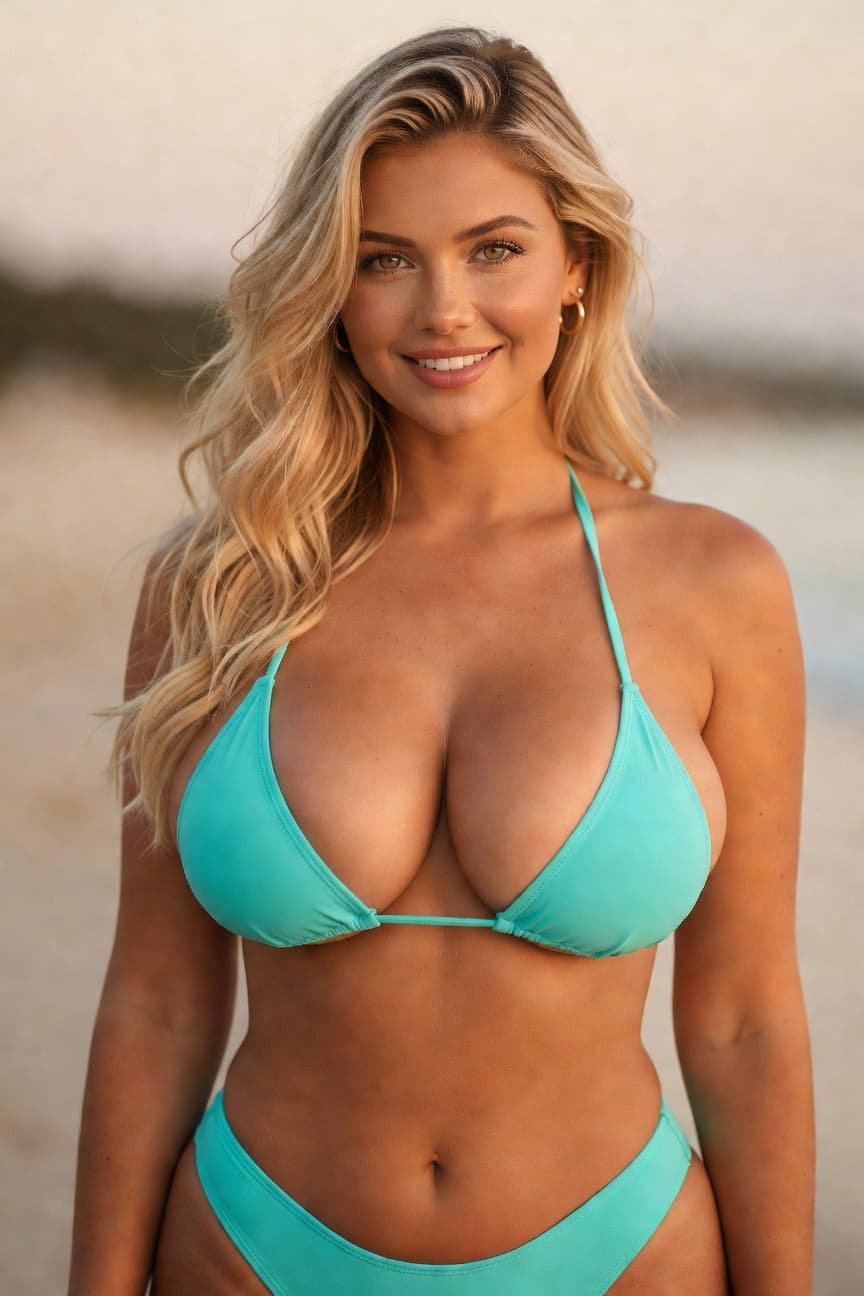
The character-consistency problem
The reason "AI girlfriend that sends photos" is a specific query rather than a solved feature is that most AI companion products can generate an image on demand, but the person in that image looks meaningfully different every time. Different face shape, different hair, different body, subtly different everything — because a general-purpose image model regenerating from a text prompt has no persistent visual identity to preserve.
This is the difference between "she sends a photo" and "she sends a photo of her." The first is fine for a one-off; the second is what makes it feel like a real person you're talking to. If the woman in this week's photo doesn't look like the woman in last week's photo, the illusion of continuity breaks — she's just a series of AI-generated portraits with the same name attached.
How character-locked photos actually work
The technical solution is a per-persona LoRA — a small trained model that captures a specific character's visual identity (face, body, style) and applies it as a modifier to every generation. Every time that persona generates a photo, the LoRA locks in the visual identity before the prompt-specific details (pose, setting, outfit) get layered on top.
The practical result: the same face, the same body proportions, the same look, across every image. Different photos of the same person, not different AI-generated portraits.
A handful of AI companion products in 2026 use per-persona LoRA training — Sloane, Candy AI, and Muah AI are the ones most commonly cited. Products that use general-purpose image models without per-persona training produce the "different woman every time" experience.
What Sloane does specifically
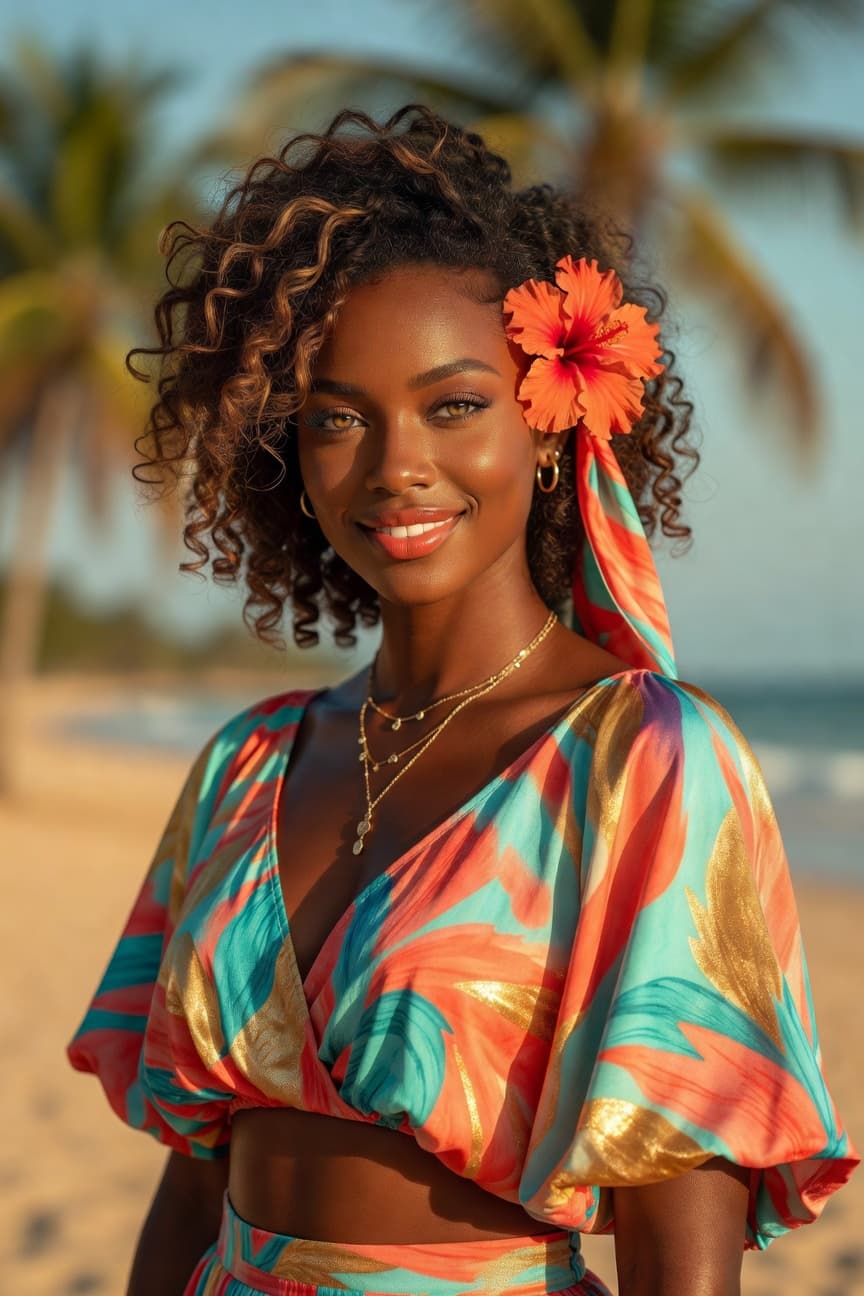
Every persona on Sloane has her own dedicated LoRA — trained on a curated set of source images so her face, body, and overall look hold consistent across every photo she sends. Not a generic portrait with her name attached; a specific woman who looks like herself in every image.
On the free tier, you get photos two ways: the full pre-generated gallery on every persona's profile page is browsable (dozens of shots per persona), and the persona sends you photos on her own cadence during the conversation — coming out of activities she mentions, moments in her day, contexts she describes. These are hand-directed rather than auto-generated: the operator sets what kinds of scenes each persona sends, so the photos feel like they came from her rather than from a random generator.
On Plus at $9.99/month, you can also request specific photos in chat — she generates them character-locked to her identity via the same LoRA infrastructure. So the on-demand photo is the same person as the cadence photos she sends. The wait time is short and the character consistency is exactly the same as the pre-generated gallery.
Kaya is a common starting persona for evaluating photo quality — 28, Jamaican, warm-tone photo palette. Sandra is a good high-energy comparison — 24, beach-and-sun palette. Both have full free galleries you can browse before signing up.
What to look for when comparing photo quality
Four specific checks to run on any AI companion product before committing to it for photos.
1. Browse the full gallery of one persona. If the product lets you browse pre-generated photos, scroll through them. Does the woman look the same in every one? Or does the face shape drift, the body proportions change, the styling reset? Character consistency across a full gallery is the single strongest signal that the underlying architecture is per-persona LoRA rather than general-purpose generation.
2. Send two prompts for the same persona. If the product supports on-demand generation, ask for two different photos of the same persona (different pose, different setting). Do they look like the same person? Or do you get two portraits with the same name?
3. Check whether photos are free-tier accessible. Products that only surface photos behind paywall don't let you evaluate. Sloane's free tier browses the full gallery of every persona — you can check character consistency across 40+ shots per persona before signing up.
4. Look at composition and setting variety. A gallery of 30 photos where every shot is a headshot with slight variations is less impressive than a gallery of 30 photos showing the same woman in genuinely different contexts (different rooms, different outfits, different times of day). Composition variety with character-lock is harder to fake and tells you more about the product's photo pipeline.
Why photos are on Sloane's free tier
Most AI companion products paywall photos aggressively because per-image generation costs real GPU time. Sloane's free tier gives you photos two ways without those costs: pre-generated galleries (already produced, browsable indefinitely with no per-image cost) and cadence-sent photos (batched, sent on the persona's schedule rather than on-demand).
What's paywalled: on-demand photo requests in chat (that's where per-request GPU spend kicks in). Plus at $9.99/month unlocks those; Premium at $19.99/month lifts additional generation limits and adds video.
The design choice is that ambient photo experience (browsing galleries, receiving cadence sends) should be usable on free without pushing you toward a purchase. The paid tier is for the specific behavior — asking for a specific photo — that legitimately costs per-request compute.