
The March 2026 free tier removal
On March 19, 2026, xAI confirmed that Grok Imagine is no longer available on the free tier. Free users get zero image generations. The prior free allotment (a small daily quota that had already been walked back several times) was retired completely, and image generation moved fully behind the SuperGrok paywall.
The framing at the time was that "premium features require premium tiers," which is corporate for "the compute costs of image generation are too high to subsidize with ad revenue." Reasonable business decision. The user impact is that anyone who was using Grok Imagine as their default free image generator lost the tool overnight.
What still exists on free Grok: text chat, some non-image tool use, standard voice. Image and video generation both require a paid subscription.
SuperGrok Lite (~$10/month) — the entry tier
SuperGrok Lite is the cheapest tier that gets you back into Grok Imagine. Reported daily image cap is around 20 generations, with a rolling 24-hour reset window rather than a fixed midnight-UTC reset (which matters if you're trying to plan around it — the "reset" happens 24 hours after each individual generation, not at a fixed daily clock).
What this actually means: 20 images/day sounds like enough until you're iterating on a specific prompt. If you regenerate the same prompt three times to get the pose right, you've burned 15% of your daily budget on one image. For casual use — one or two images a day for social posts or personal use — Lite is fine. For sustained creative work, it's tight.
Video generation on Lite: essentially nonexistent as a practical tool. The quota is low enough that Lite users effectively don't have video access.
SuperGrok Heavy ($300/month) — the pro tier
SuperGrok Heavy is a substantial jump in price and access. The image cap climbs to around 50/day, and video generation opens up to about 500 renders/day. For anyone actually using Grok Imagine as a professional or high-volume tool, this is the tier that makes it usable.
What you're paying for at $300/month: predictability (you're very unlikely to hit the cap in a normal workday), priority queue access, and the fewest restrictions in xAI's current lineup. What you're not getting: unlimited generation. Even Heavy has caps, and the caps are enforced.
For context on price: $300/month is where enterprise creative-tool pricing sits (Adobe Firefly for teams, Midjourney Mega, Runway Enterprise). Grok's Heavy tier is not unusual for the category, but it is a serious commitment.
Why the caps exist
Two honest reasons.
GPU economics. Image generation on frontier models costs meaningfully more per image than text generation. A single high-quality image can run several seconds of H100 time; a video render can run minutes. At scale, unlimited generation would require infrastructure that no consumer subscription price could cover.
Anti-abuse. Uncapped generation is a magnet for bulk scrapers, spam campaigns, and CSAM abuse attempts. Even a very high cap (like Heavy's 500 videos/day) is enough friction to filter out the extreme abuse cases without blocking legitimate power users.
Both reasons are structural, not fixable by user pressure. The caps are here to stay.
What to use when you hit the wall
If you've maxed your Grok Imagine daily quota, the options split by what you were using it for.
For general creative image work — the Midjourney/Firefly/DALL-E tier of tools remain the most direct substitutes. Midjourney at $30/month gives generous fast-mode allocation. Firefly bundles with existing Adobe subscriptions. DALL-E through ChatGPT Plus works if you're already paying for that.
For character-consistent AI portraits or companion-style imagery — the tools you want are per-character LoRA-tuned platforms rather than general image generators. Character consistency (the same person looking like the same person across regenerations) is a specific technical problem that general models don't solve well.
For AI companion imagery specifically — Candy AI, Sloane, and Muah AI all ship per-persona LoRA generation, which means the character's face, body, and style hold across every generation. Sloane's photo generation runs on per-persona LoRA weights, so any persona you pick generates photos in her consistent look with no prompt engineering required. Pricing is a flat monthly ($9.99 Plus, $19.99 Premium) rather than the per-image caps you hit on Grok — the tradeoff is that the personas are a fixed roster rather than open-ended prompt-to-image.
Which alternative fits which use case
You want unlimited general-purpose image generation. No consumer tool offers this in 2026. Every serious generator has caps or per-image pricing. Closest to "unlimited" for a flat monthly is Midjourney's highest tier at $120/month, which is generous but still caps at the extremes.
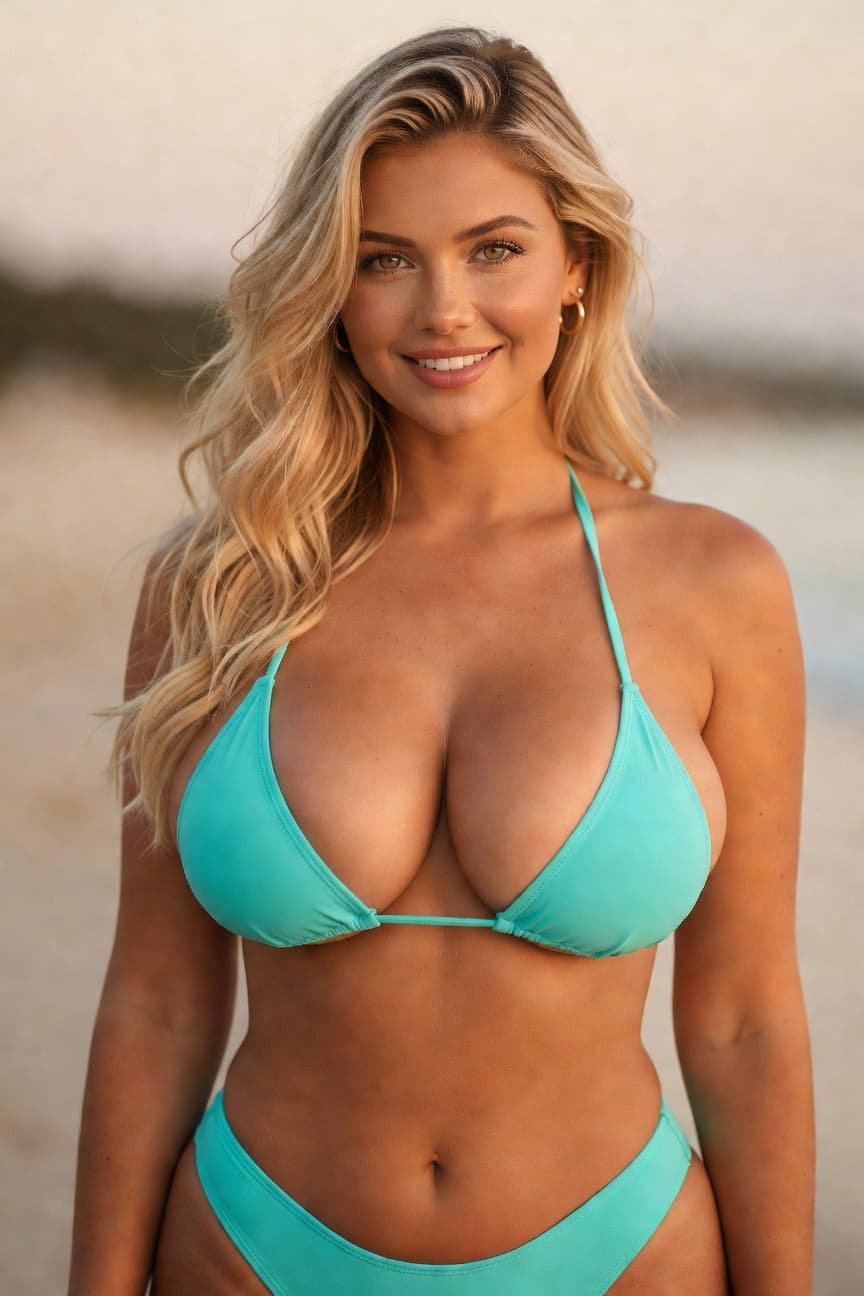
You want lots of AI portraits of the same specific character. Character-consistent generation is what per-persona LoRA platforms are built for. Sloane, Candy AI, and Muah AI all do this. If you're hitting Grok's cap trying to generate 30 images of the same girl, you're fighting Grok's general-purpose architecture — a purpose-built companion platform solves it natively. Sandra is a good example — every one of her photos runs through the same LoRA, so she looks like the same person across her entire gallery.
You want AI video specifically. Only SuperGrok Heavy currently gives meaningful daily video access on Grok itself. For alternatives: Runway ML at $35+/month has strong video-to-video and text-to-video. Sloane's Premium tier at $19.99/month includes on-demand video generation of the personas at Wan 2.2 i2v quality — smaller scope than Grok Heavy's general-purpose video, but usable for the AI-companion use case and 15x cheaper.
You want to stop paying for AI image tools entirely. Honest answer: the market has moved. Frontier image generation is now consistently paid, and free tiers across the category have compressed or disappeared through 2026. What you can still do for free: browse pre-generated content on companion platforms (Sloane's free tier lets you browse the full photo gallery of every persona), use Google's free image tools which are lower quality but still zero-cost, or use open-source local generation (Stable Diffusion, ComfyUI) if you have a capable GPU.
The strategic read
The Grok Imagine limit tightening is a leading indicator, not an outlier. Every AI image generator is moving in the same direction — free tiers dying, per-image caps becoming the norm, unlimited flat-rate access becoming an enterprise-tier feature. The category as a whole is transitioning from "free growth engine" to "priced compute infrastructure," and the pricing will keep rising through 2026-2027 as inference costs get accounted for honestly.
What this means for choosing tools: pick for what you actually use, not for the theoretical unlimited ceiling. If you generate 5-10 images a day for a specific narrow use case, a purpose-built tool at $10-20/month will serve you better than a general-purpose tool at $300/month that you're not using the ceiling of. If you're a professional generating 100+ images a day for client work, the $300/month tier is a business expense and the math works out.
The worst position to be in is paying for the top tier of a general-purpose tool for a narrow-purpose need. That's where a purpose-built alternative pays for itself in the first month.