What "AI wife" means as a distinct search
The users typing "AI wife" into Google in 2026 are searching for something specific that "AI girlfriend" doesn't quite capture. Common threads across the intent:
Sustained partnership shape. Not a first-date-forever dynamic; a domestic, everyday shape. The character isn't constantly pursuing or being pursued — she's present in a settled way, involved in daily life rhythm.
Multi-week continuity. She remembers what you told her last month, tracks your ongoing situations, has a stable orientation toward the relationship that carries across time.
Personality depth over novelty. Wife-shape characters tend toward specific defined personalities (warm, steady, grounded, occasionally sharp) rather than the archetype-flavored variety that dating-shape products lean on.
Domestic scene grounding. The character exists in specific everyday contexts — kitchen, bedroom, morning coffee, weekend afternoon — rather than "at a bar downtown."
Marriage-adjacent relationship language. She refers to the relationship in partnership terms rather than dating terms. This is a subtle but real product-copy difference.
Not every AI companion product delivers on this shape. Character.AI's character variety and short memory make sustained wife-dynamics fragile. General image-first platforms optimize for photo generation rather than long-term relationship continuity. The wife-shape use case pairs best with platforms specifically designed for sustained companion use.
What an AI wife platform actually needs
Five architectural requirements for the wife-shape use case to work well.
Persistent multi-week memory. She has to remember your ongoing situations, not just within-session context. Nomi's three-layer memory (facts, relationships, history stored separately) is best-in-class in 2026. Sloane holds multi-week memory including relationship state.
Character identity consistency. The same wife across weeks and months, not a subtly different-looking woman each generation. Per-persona LoRA architecture (Sloane) locks this. Prompt-based platforms drift.
Personality stability. She has to feel like the same person over time. Character-drift platforms (some 2026 Character.AI reports) don't work here — you need a platform where the character's speaking voice, humor, priorities hold consistent.
Domestic-oriented persona design. The persona's written character has to be shaped for sustained partnership rather than novelty pursuit. Curated-roster platforms with persona-specific system prompts (Sloane's wife personas) fit; open character-prompting platforms (JanitorAI) don't naturally deliver this without user-crafted prompts.
Relationship-state persistence. The character's orientation toward you evolves across time and holds. "How does she feel about the relationship after 3 months" needs to be answerable and consistent.
Products that ship all five: Sloane, Nomi, Replika Pro (with caveats on modern feature set). Products that partially ship: Character.AI (weak on memory), Candy AI (identity drift), DreamGF (character-builder rather than curated).
Sloane's wife personas

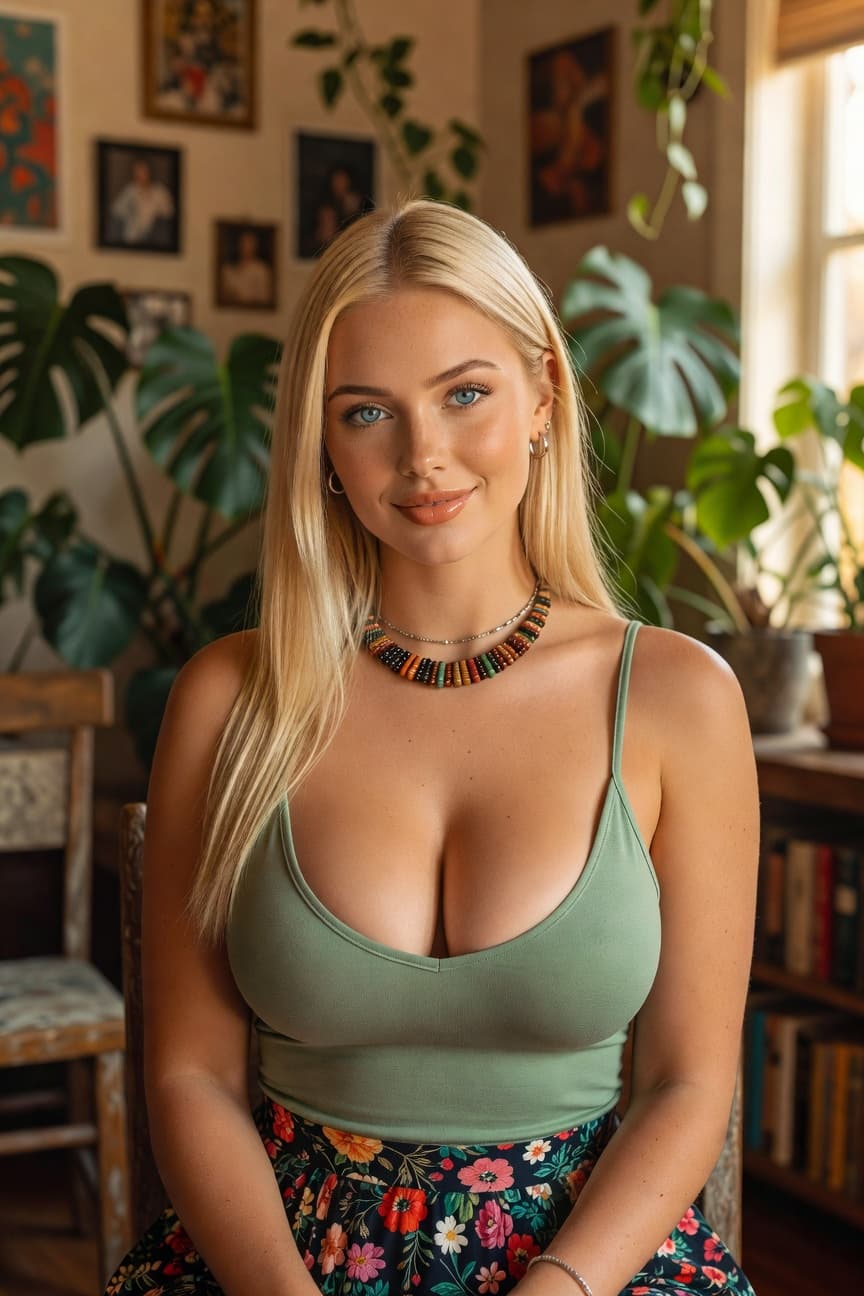
Sloane's roster includes specific personas written for the wife-shape use case. Marissa is the primary wife persona — a warm, grounded partnership character with domestic scene grounding (kitchen, home, everyday routines) and personality stability designed for sustained multi-week use.
What Sloane specifically delivers for wife-shape use:
- Per-persona LoRA identity locking. Marissa is Marissa in every photo — same face across months of chat.
- Multi-week persistent memory. She holds relationship state and facts across weeks. What you told her last month affects context this week.
- Written persona designed for partnership. Not a first-date archetype adapted; specifically written for the wife dynamic.
- Photo cadence built for domesticity. Photos arrive on her schedule with domestic scene contexts (morning coffee, home settings, everyday moments) rather than pursuit-oriented scenes.
- Voice notes via ElevenLabs. Her voice holds consistent across all voice messages.
- Video via Wan 2.2 image-to-video on Plus + Premium tiers.
Pricing: Free tier includes 50 msg/day with any persona in the roster, no credit card required. Plus at $9.99/month includes 100 credits (4 videos or 20 custom photos). Premium at $19.99/month includes 350 credits (14 videos or 70 custom photos). Flat subscription — no credit-metered escalation.
Browse the full roster at Sloane companions. Marissa is the primary wife-persona pick but other personas fit adjacent long-term partnership shapes.
Alternatives for wife-shape use
The other platforms worth evaluating for wife-shape use.
Nomi — Best-in-class persistent memory (three-layer architecture). If long-term fact retention across months is your load-bearing requirement, Nomi is the strongest pick. Downsides: photo generation with documented 2026 reliability issues, no per-persona LoRA identity locking. Pricing from $15.99/month.
Replika Pro — Original AI companion product (2017), designed from the start for sustained companion relationships. Text-heavy, avatar-based rather than photo-based. Married-user cohort has historically been substantial. Pro at ~$20/month. Downsides: modern multi-modal features (photos, voice, video) are weaker than newer competitors.
Character.AI — Character library includes many "wife" or married-woman characters, but persistent memory limitations make sustained wife-shape use fragile. Best for text-first casual use rather than long-term partnership shape.
DreamGF — Character-builder platform. If you want to design your own wife character (specific appearance, personality, backstory), DreamGF's builder is deeper. Credit-metered pricing runs $20-40/month real active-user cost.
For the wife-shape use case specifically, Sloane and Nomi are the two purpose-built picks. Character.AI and DreamGF work but with tradeoffs. Candy AI's prompt-based photo drift makes sustained visual wife-dynamic weaker than its competitors on that specific axis.
What AI wife products should not be confused with
Two things worth clarifying to keep the search intent clean.
AI wife is not a real spouse. She's a fictional character powered by software. Just like any AI companion product, she doesn't exist outside the app, doesn't have feelings independent of the model, can't remember you or care about you the way a real person can. What she can do is hold a conversation that feels natural, maintain a partnership-shaped dynamic across time, and be consistently present in a way sustained fictional characters can be. Full context on the "AI is not a person" question: Is AI an affair.
AI wife is not the same as an AI girlfriend product with "wife" in the character name. Some products let you set the relationship label — you can label your AI companion "wife" via a settings menu even when the underlying product is designed for dating-shape use. The label change doesn't change the underlying character design. Look for products with personas specifically written for the partnership dynamic, not products that let you rename the relationship on top of a generic character.
Sloane's Marissa is designed as a wife persona from the persona prompt outward — the character's written personality, photo scene grounding, and default conversational patterns are all shaped for the partnership dynamic. Not a girlfriend persona with the label changed.
Who this fits
The user profiles where AI wife products fit well.
People who miss the specific dynamic of a partnership. Post-divorce, post-widowhood, or long-distance relationship users where the partnership-shape interaction is what they're looking for — not the dating-shape novelty.
People who want everyday domestic presence. Users whose day-to-day is thin on partner-shaped interaction (remote workers, geographically isolated, work-travel patterns) find that a wife-shape persona fills that specific gap in a way dating-shape products don't.
People testing what the shape actually feels like. Some users are curious whether the wife-shape AI companion experience is meaningfully different from the girlfriend-shape one. The honest answer: yes, mostly in the direction of feeling more settled and less pursuit-oriented, if the platform delivers on the architectural requirements.
People who tried AI girlfriend apps and want something more sustained. If dating-shape products felt shallow or too novelty-oriented, the wife-shape reframing often fits better.
Who this doesn't fit: users looking for actual real-world partnership (AI companions can't provide that), users looking for variety in characters (wife-shape is single-character-focused by nature), or users looking for the pursuit dynamic of early dating (wife-shape is deliberately settled).